Samhall
AI-powered inclusive onboarding for persons with disabilities
Role
Research and Strategy
Duration
3 weeks
Hyper Island Team
Aniel, Nicole, Josh and myself
Outcomes
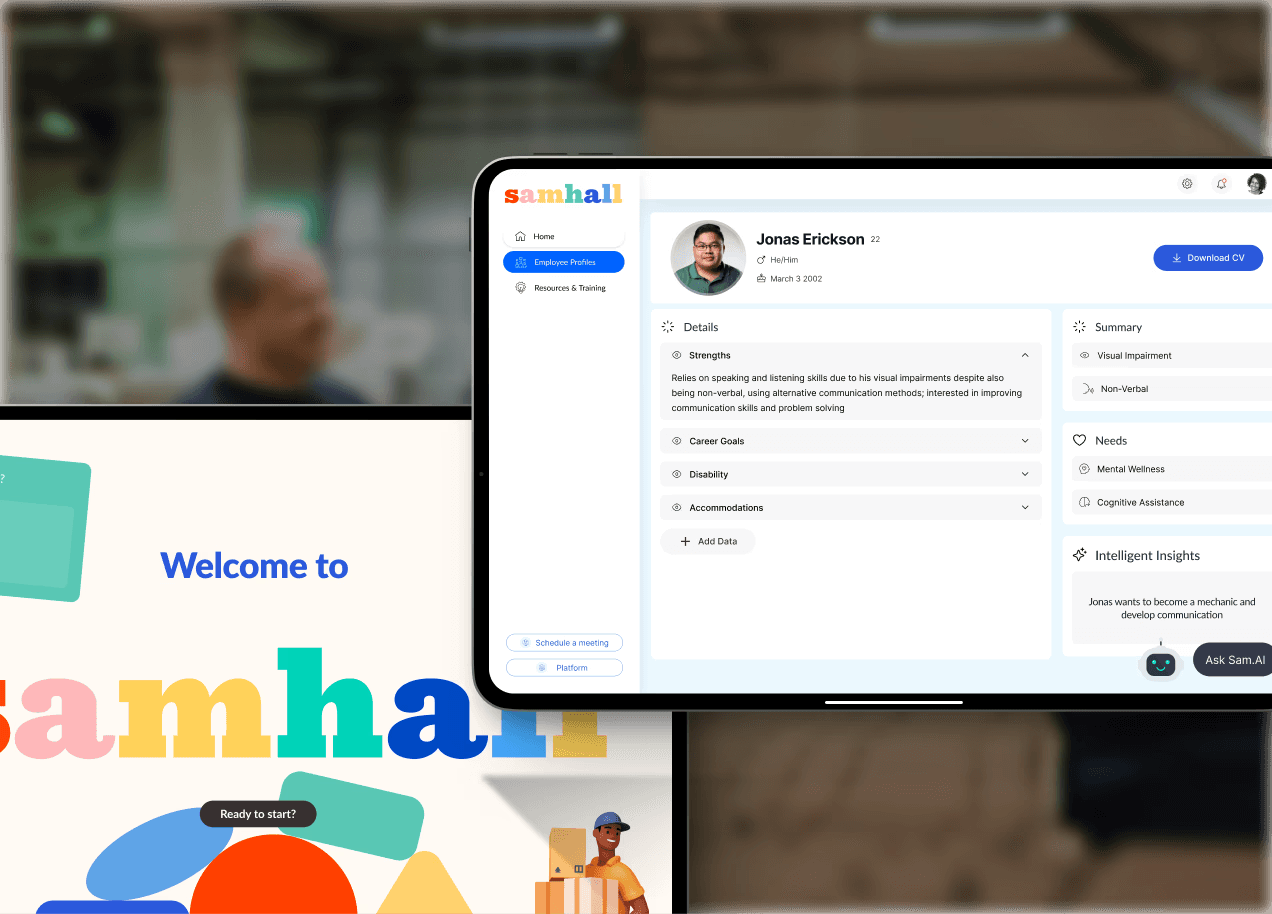
Designed an AI-driven onboarding system with a live data hub, chatbot, and voice support. The tool enhances HR efficiency during the onboaridng phase.
Overview
We designed an inclusive onboarding experience using assistive tech and AI, tailored for a diverse workforce at Samhall. A systems-thinking approach ensured empathy and accessibility were embedded throughout the user journey.
Who is Samhall? - Samhall is a Swedish organization creating meaningful jobs for people with disabilities. Their mission is to build inclusive workplaces with equal access, support, and growth.
The Challenge
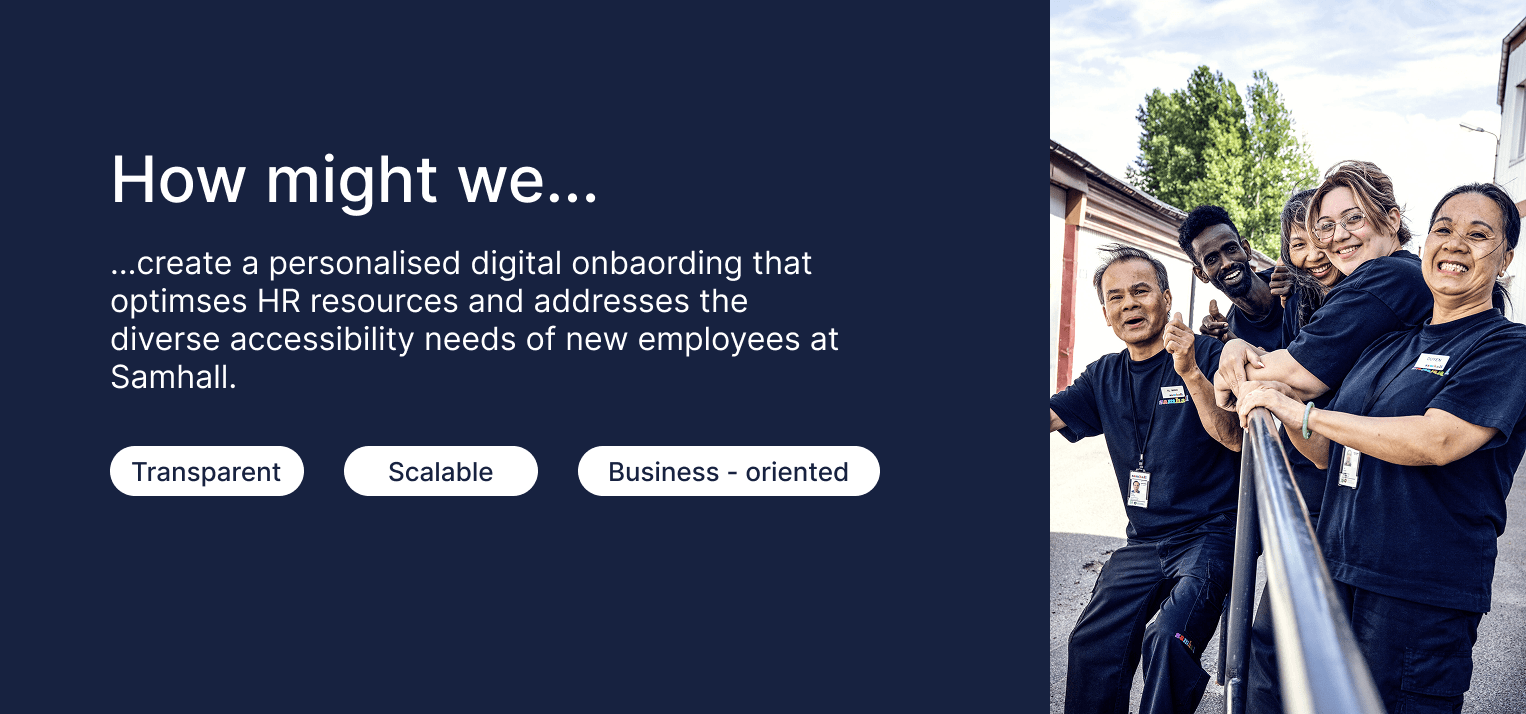
Research Methodology
Having a deep understanding of available technologies and the potential solutions that assistive technologies (ATs) can drive, will foster a more inclusive approach toward people and their needs. We applied Universal Design and Systems Thinking to ensure inclusion was built into every layer of the experience.
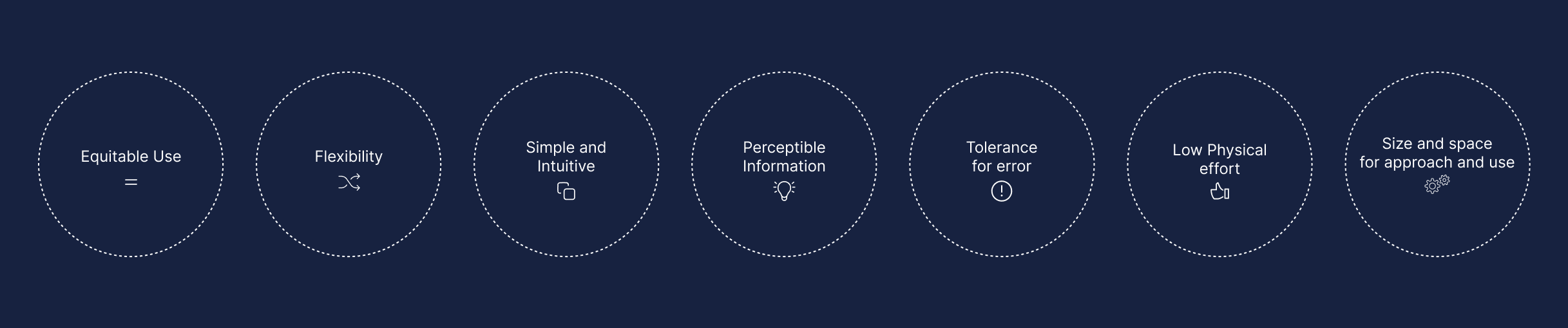
Universal Design 7 Principles
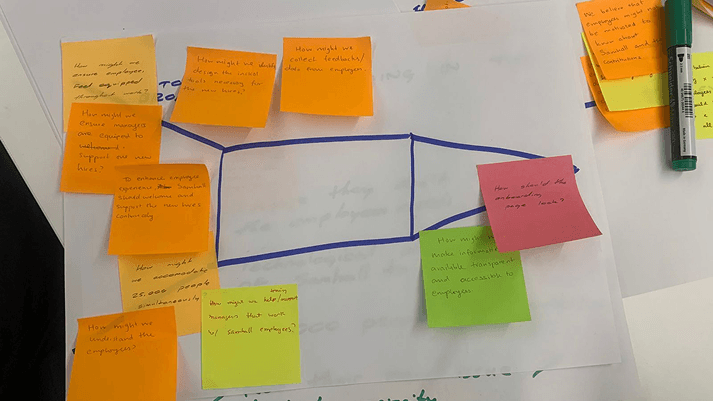
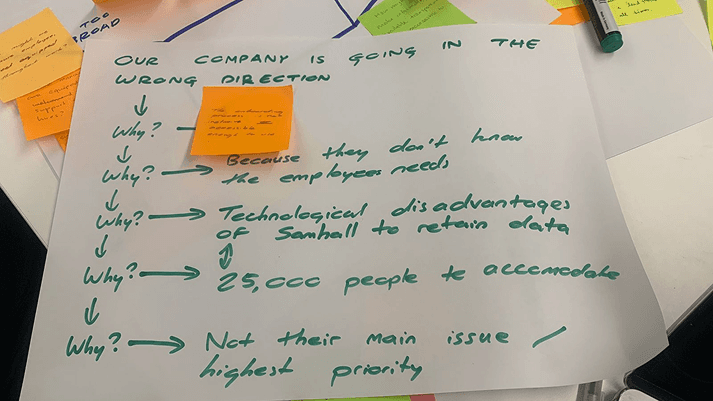
Ideation Tools explored - 5 Whys, Personas, How might we? Qs
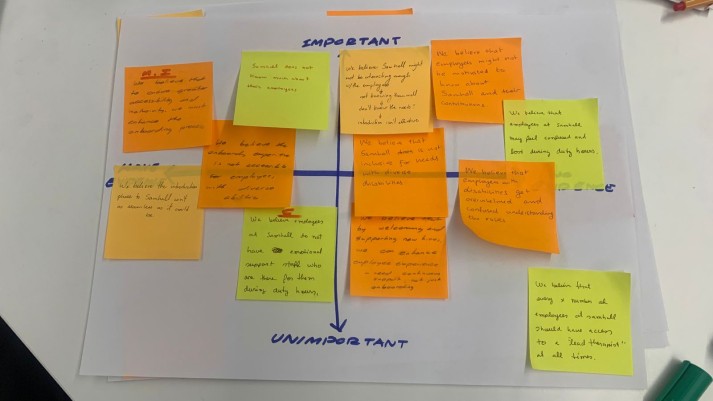
Framework for Smahall
How might we?
Make information accessible and transparent?
Equip managers with training and tools?
Understand employee needs better?
Beyond the Business case
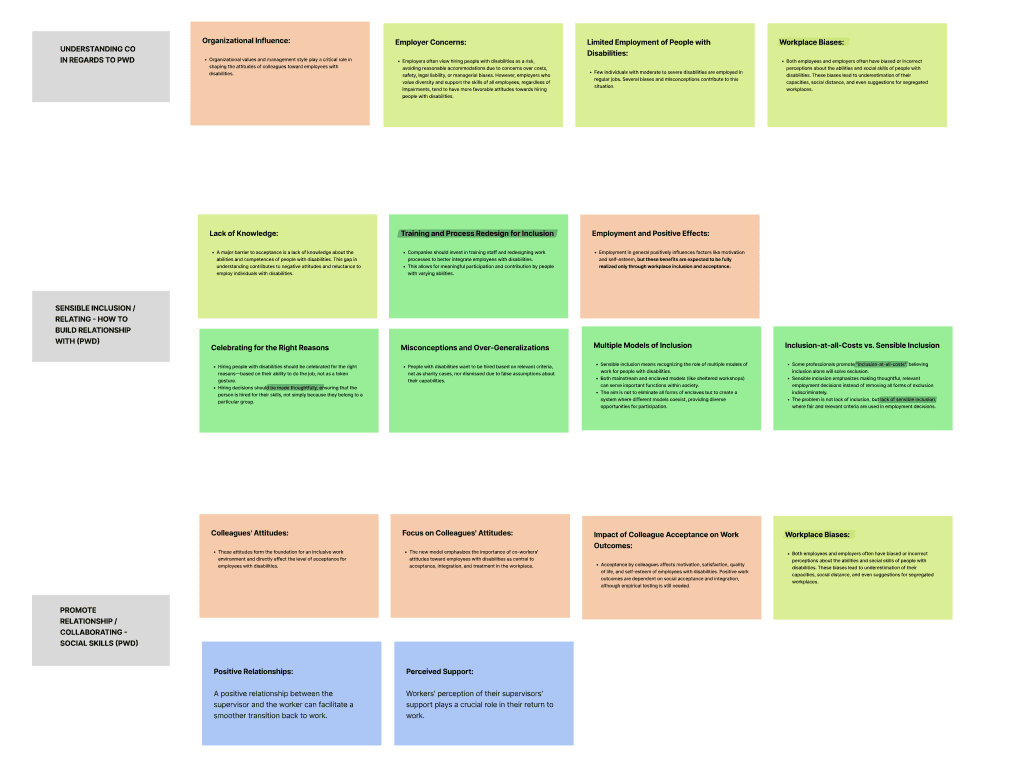
By considering the entire eco-system it was clear that this problem is not exclusive for Samhall and we could aim for a positive ripple effect if accessible design is implemented from the beginning.
We created a model that would show us the whole picture of how we can create sensible inclusion and induce positive attitude towards employees with disabilities by creating an inclusive onboarding process.
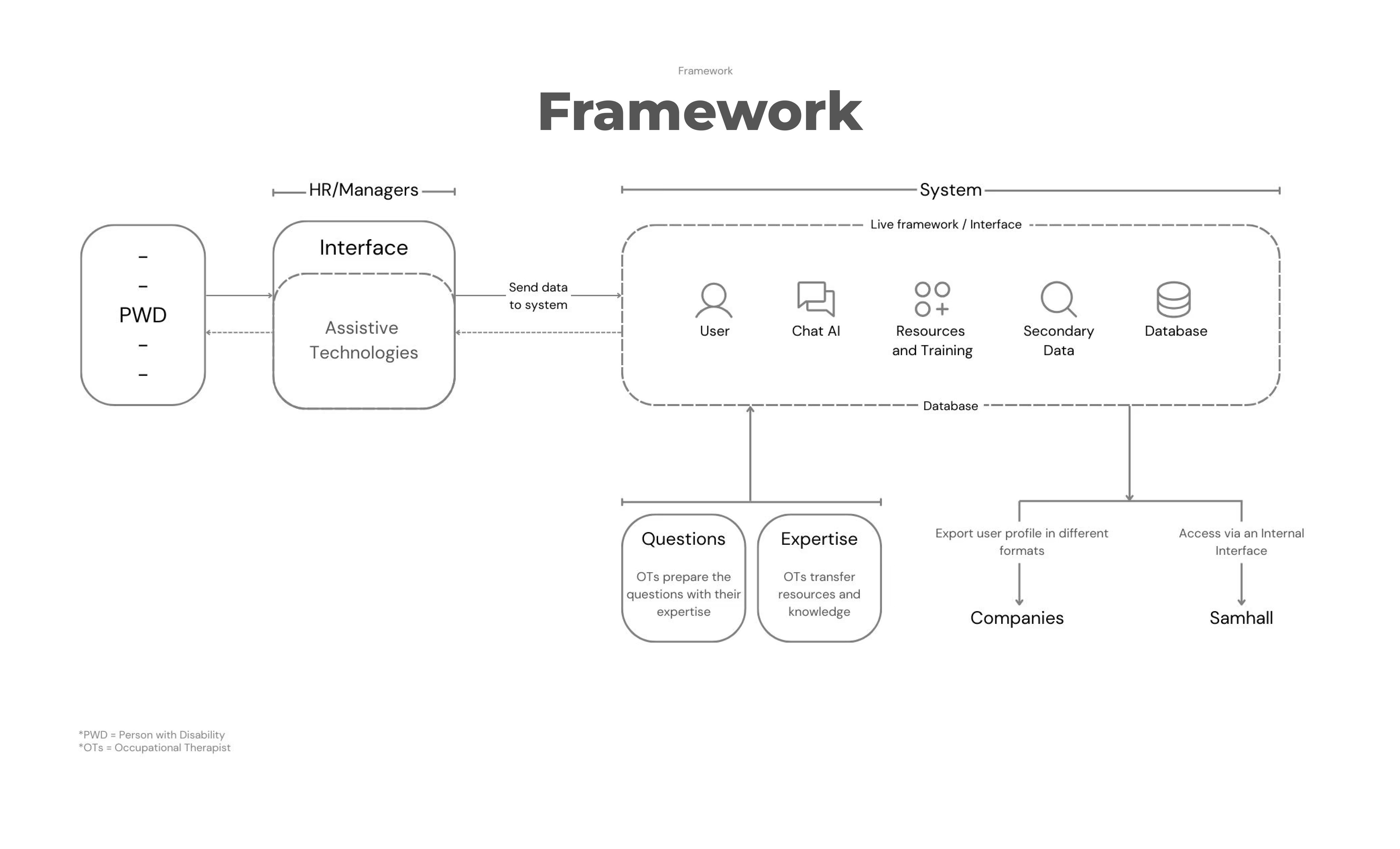
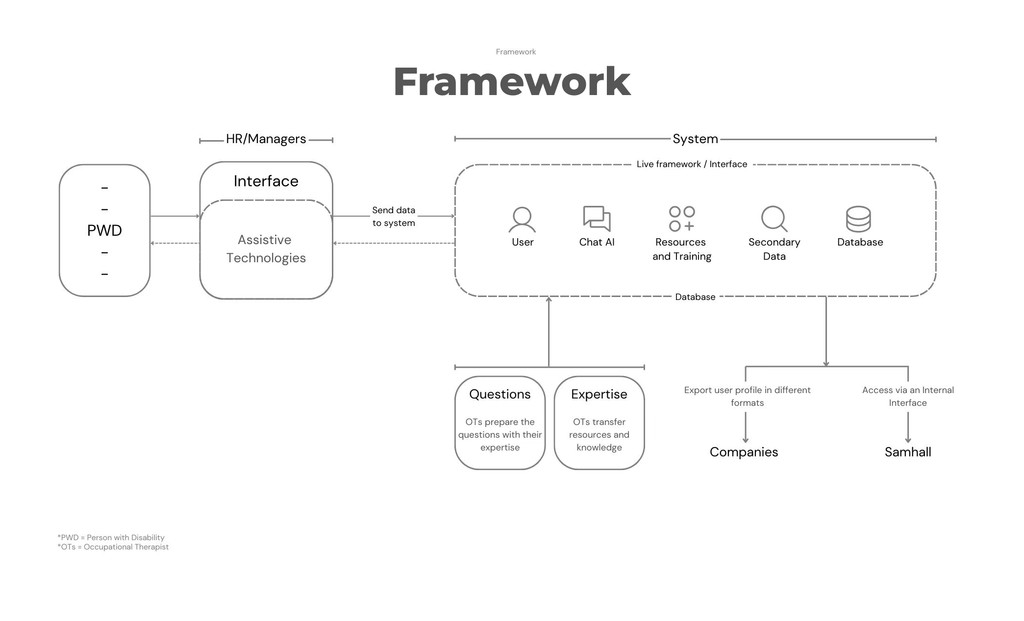
We designed an inclusive onboarding framework involving occupational therapists, managers, and employees.
A centralized AI system collects questionnaire responses, clusters employee data, and creates accessible profiles.
Managers use a chatbot to retrieve insights and support employees effectively.
Framework for Smahall
Tech Stack
Our stack combined Vectorshift AI for automation, OpenAI LLM for chatbot support, and Whisper for voice access.
AI Usage in the solution
With the rising automations and for scalability our solution incorporated an AI based data repository. AI has no cultural or ethical background. It was very crucial to iterate our solution about the effects of using an AI model for processing sensitive data in an ethical way.
In result, we trained the AI model with a few pre scripts on how it should process, store and behave when a query is entered. We also ensured to keep a backup data and track about the information processed for possible human inspections.
Voice Recognition API
To make the app accessible and interactive, we implemented ‘Web Speech API’ for voice recognition.
It is powered with ‘Whisper’ by OpenAI
AI Agent
‘Vectorshift’ AI Agent for data integration between the app, Google Sheets, and chatbot access.
OpenAI LLM for the chatbot.
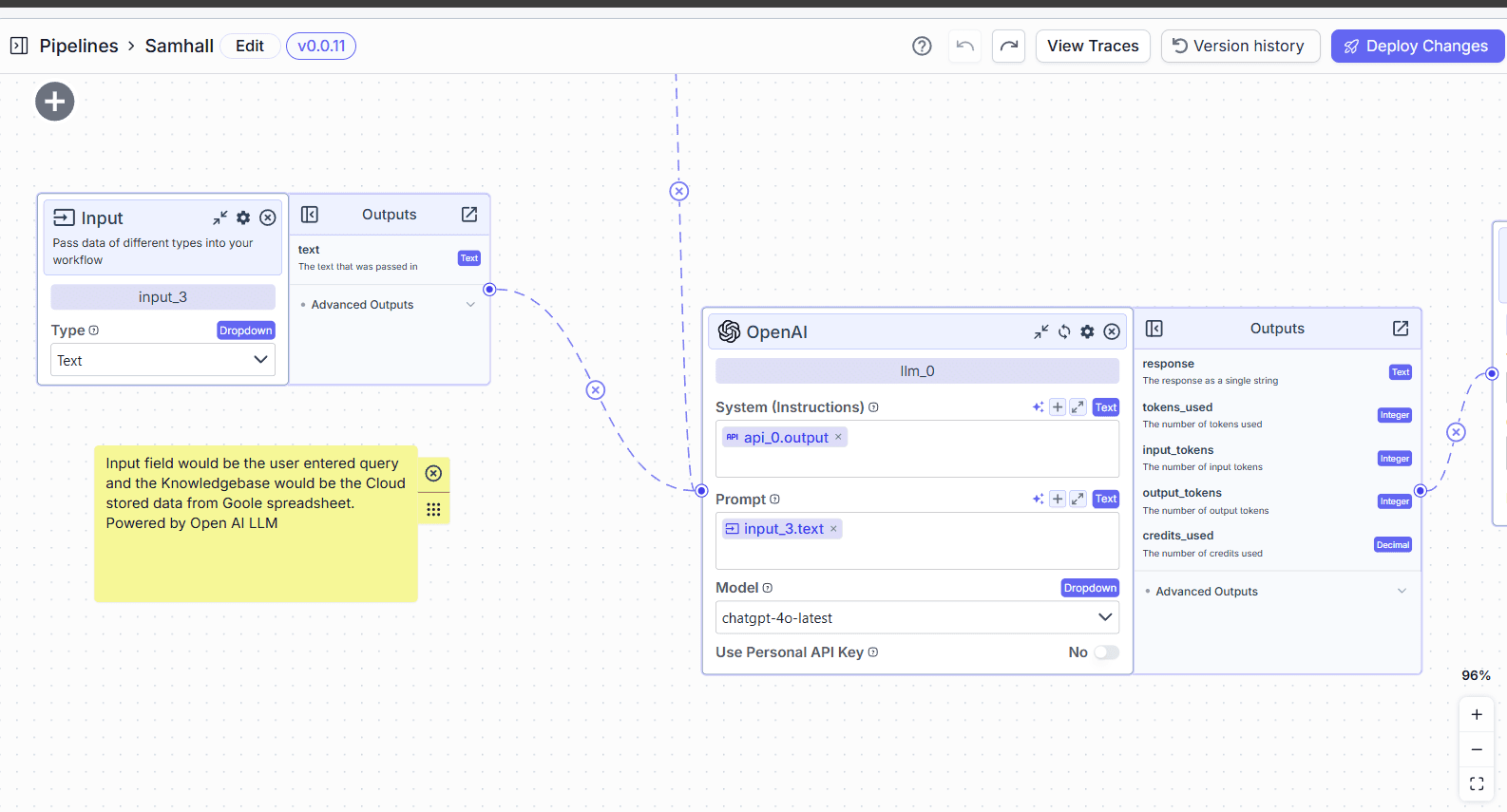
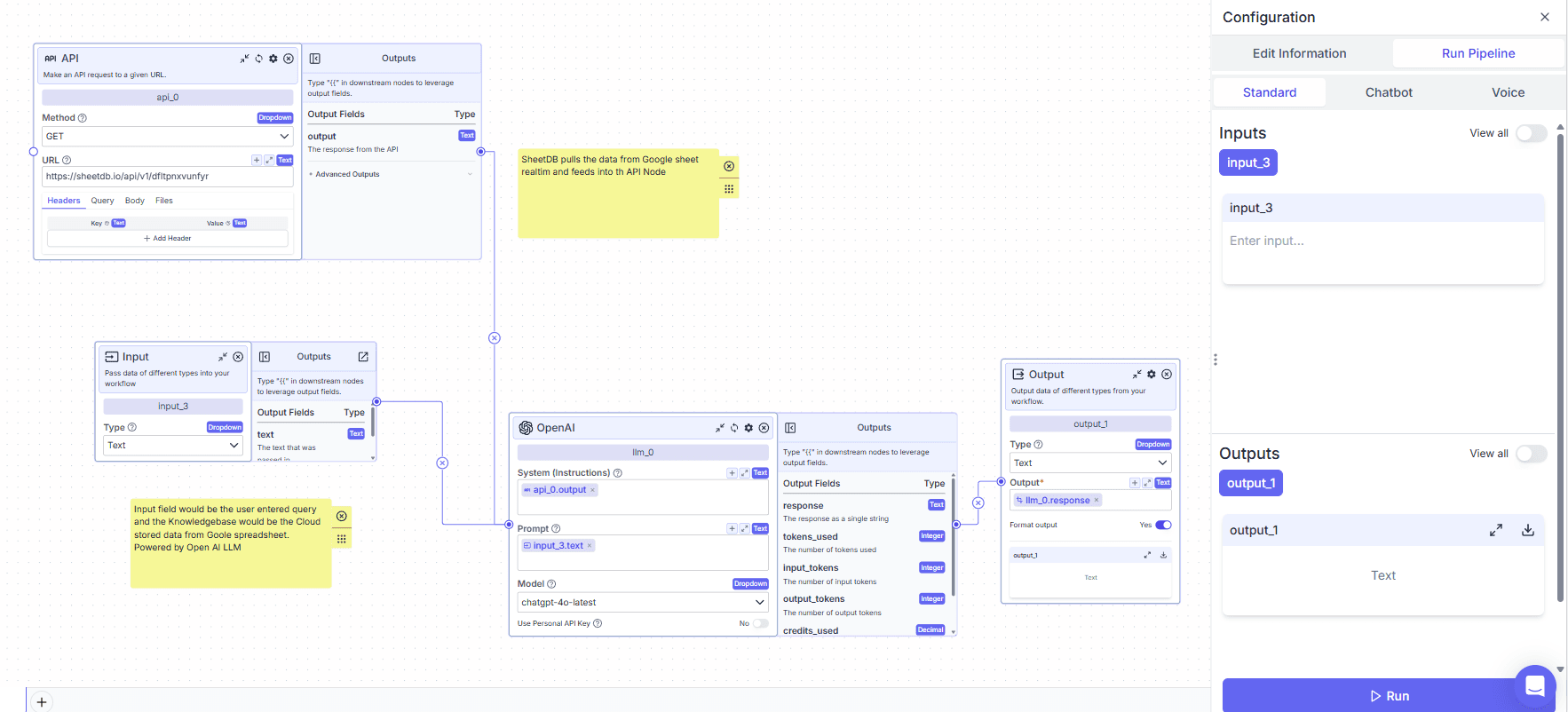
AI Agent automation from Vectorshift
Testing
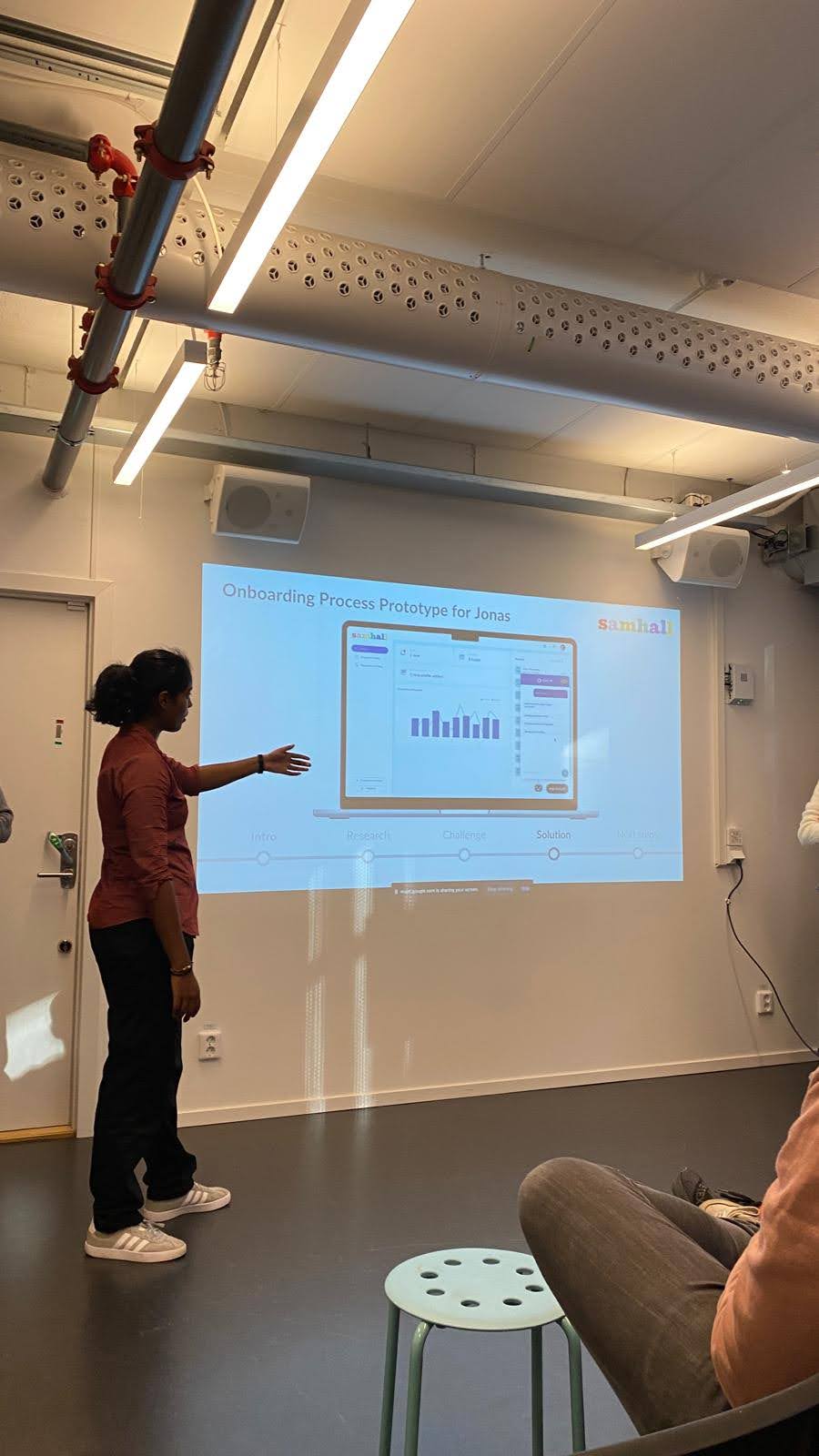
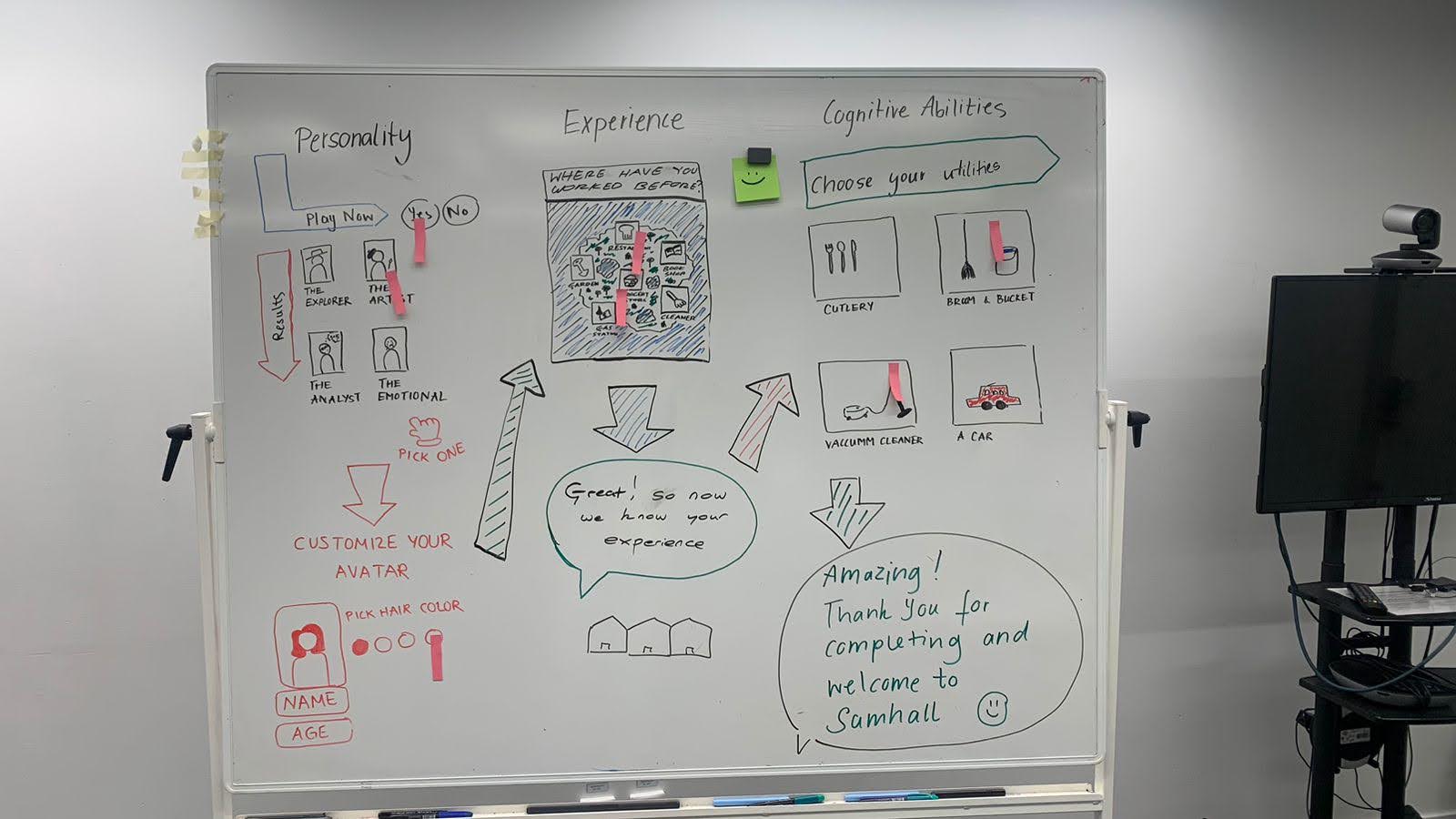
Congitive walkthrough Method - We adopted a testing technique named Cognitive Walkthrough to test the solutions as we had limitations in accessing the real users.
Testing reinforced our focus on ethical design and privacy. - Our proposed solutions required careful attention to privacy, especially when dealing with personal data related to disabilities. Ethical design principles and GDPR compliance standards guided our approach to safeguarding sensitive information.
Future rounds with real users and focus groups will strengthen validation. - By testing, we also identified challenges and iterated the use of language to a more inclusive one. We also believe that further testing with focus groups is required to deliver a better version.
Reflections and Learnings
As we refined the framework, we realized how important it was for employees to have access to their own onboarding data.
I saw how this simple shift built transparency, trust, and gave individuals more autonomy over their journey and even the chance to discover insights about themselves.
We were careful about how consent was asked and given, and this process deepened our understanding of what ethical design really demands. Privacy isn’t a checkbox, it’s an ongoing conversation that needs empathy, clarity, and care.
OTHER PROJECTS
Samhall
AI-powered inclusive onboarding for persons with disabilities
Role
Research and Strategy
Duration
3 weeks
Hyper Island Team
Aniel, Nicole, Josh and myself
Outcomes
Designed an AI-driven onboarding system with a live data hub, chatbot, and voice support. The tool enhances HR efficiency during the onboaridng phase.
Overview
We designed an inclusive onboarding experience using assistive tech and AI, tailored for a diverse workforce at Samhall. A systems-thinking approach ensured empathy and accessibility were embedded throughout the user journey.
Who is Samhall? - Samhall is a Swedish organization creating meaningful jobs for people with disabilities. Their mission is to build inclusive workplaces with equal access, support, and growth.
The Challenge
Research Methodology
Having a deep understanding of available technologies and the potential solutions that assistive technologies (ATs) can drive, will foster a more inclusive approach toward people and their needs. We applied Universal Design and Systems Thinking to ensure inclusion was built into every layer of the experience.
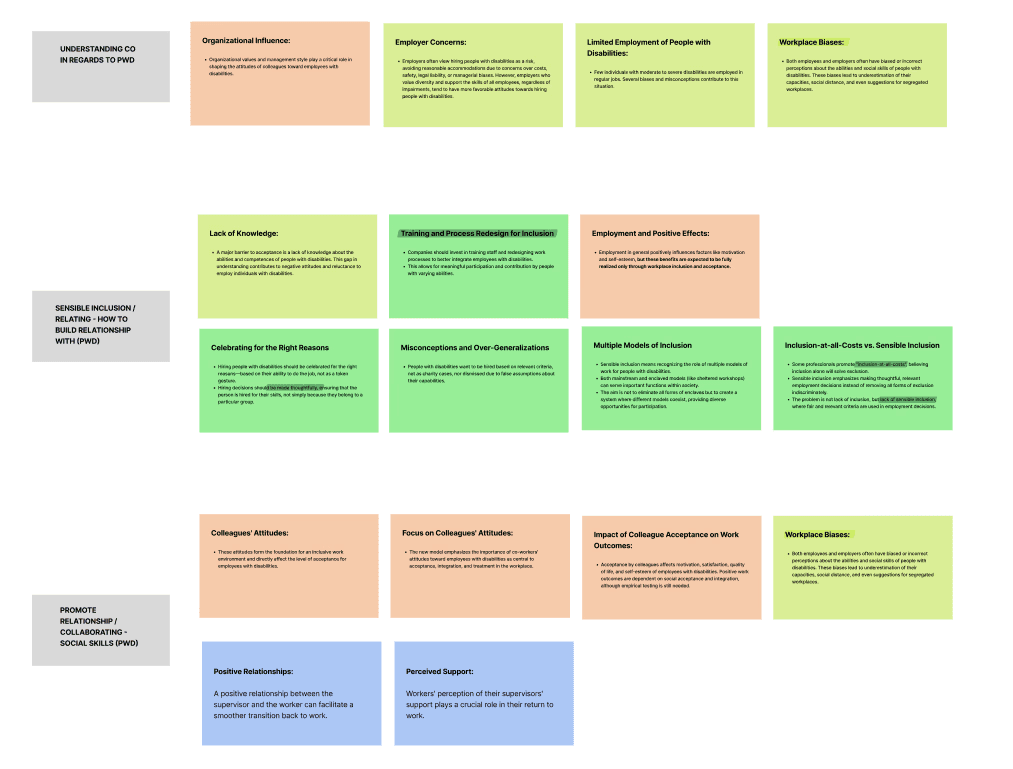
Ideation Tools explored - 5 Whys, Personas, How might we? Qs
How might we?
Make information accessible and transparent?
Equip managers with training and tools?
Understand employee needs better?
Beyond the Business case
By considering the entire eco-system it was clear that this problem is not exclusive for Samhall and we could aim for a positive ripple effect if accessible design is implemented from the beginning.
We created a model that would show us the whole picture of how we can create sensible inclusion and induce positive attitude towards employees with disabilities by creating an inclusive onboarding process.
We designed an inclusive onboarding framework involving occupational therapists, managers, and employees.
A centralized AI system collects questionnaire responses, clusters employee data, and creates accessible profiles.
Managers use a chatbot to retrieve insights and support employees effectively.
Tech Stack
AI Usage in the prototype
With the rising automations and for scalability our solution incorporated an AI based data repository. AI has no cultural or ethical background. It was very crucial to iterate our solution about the effects of using an AI model for processing sensitive data in an ethical way.
In result, we trained the AI model with a few pre scripts on how it should process, store and behave when a query is entered. We also ensured to keep a backup data and track about the information processed for possible human inspections.
Voice Recognition API
To make the app accessible and interactive, we implemented ‘Web Speech API’ for voice recognition.
It is powered with ‘Whisper’ by OpenAI
AI Agent
‘Vectorshift’ AI Agent for data integration between the app, Google Sheets, and chatbot access.
OpenAI LLM for the chatbot.
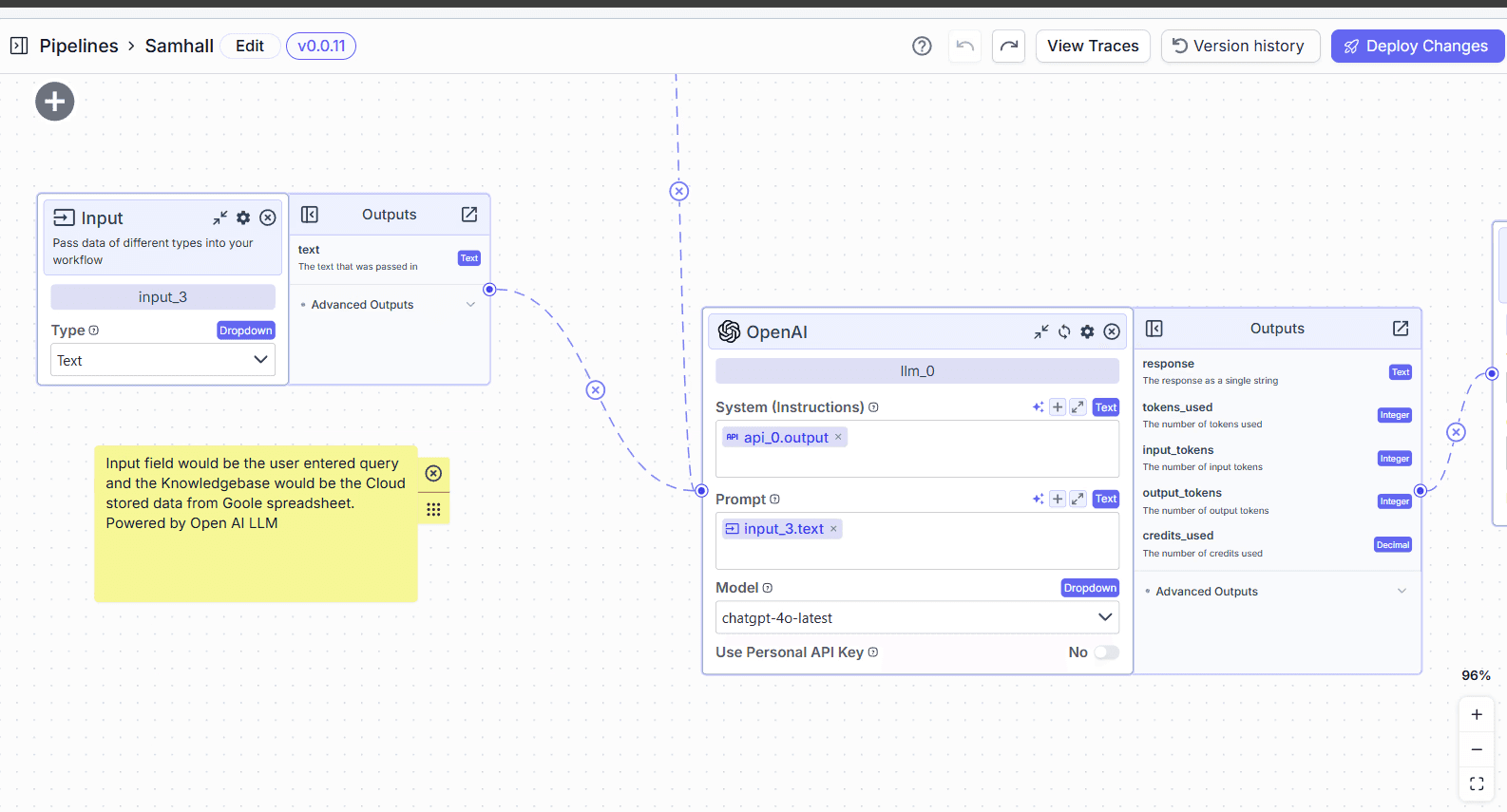
Our stack combined Vectorshift AI for automation, OpenAI LLM for chatbot support, and Whisper for voice access.
Congitive walkthrough Method - We adopted a testing technique named Cognitive Walkthrough to test the solutions as we had limitations in accessing the real users.
Testing reinforced our focus on ethical design and privacy. - Our proposed solutions required careful attention to privacy, especially when dealing with personal data related to disabilities. Ethical design principles and GDPR compliance standards guided our approach to safeguarding sensitive information.
Future rounds with real users and focus groups will strengthen validation. - By testing, we also identified challenges and iterated the use of language to a more inclusive one. We also believe that further testing with focus groups is required to deliver a better version.
Testing
As we refined the framework, we realized how important it was for employees to have access to their own onboarding data.
I saw how this simple shift built transparency, trust, and gave individuals more autonomy over their journey and even the chance to discover insights about themselves.
We were careful about how consent was asked and given, and this process deepened our understanding of what ethical design really demands. Privacy isn’t a checkbox, it’s an ongoing conversation that needs empathy, clarity, and care.
Reflections and Learnings