Samhall

Samhall

Samhall

Onboarding Research, methods and Solution with AI

Role

UX Researcher

UX Researcher

UX Researcher

Industry

Hyper Islad Master's Project

Hyper Islad Master's Project

Hyper Islad Master's Project

Duration

3 weeks

3 weeks

3 weeks

Project Overview

This project explores the integration of assistive technologies and AI to create an inclusive onboarding experience, aiming to benefit a diverse workforce. By embedding accessibility into the design process, our solution addresses not only immediate user needs but also sets a foundation for long-term impact across the entire work cycle. Through a systems-thinking approach, we ensure that inclusivity and empathy are central, driving positive effects throughout the user journey.

Who is Samhall?

The client, Samhall, is a Swedish organization dedicated to creating meaningful employment opportunities for individuals with disabilities. Their mission focuses on building inclusive workplaces that provide equal access, support, and growth opportunities for all employees.

Research Methodology

Having a deep understanding of available technologies and the potential solutions that assistive technologies (ATs) can drive, will foster a more inclusive approach toward people and their needs. The research methods and frameworks that will be utilized in these solutions are Universal Design and Systems Thinking.

Universal design is based on 7 principles and one of them is ‘Flexibility in Use’. This simply means that there would be choices and a wide range of preferences that the user can choose to best accommodate their needs.

Ideation tools

5 Whys

Asking “why” five times allows for a deeper understanding of the problem and its underlying causes. In the end of this exercise, it brought us to one area to focus on which is,

‘People working for the companies are not trained/prepared to work with person with disabilities’

How might we?

These ideation tools with a systems thinking approach led us to a number of challenges that helped us to create a holistic solution that address human and societal needs.  Some of the examples are as below,

How might we make information accessible and transparent to all employees?

How might we ensure managers are equipped with necessary training and resources?

How might we understand the core needs of employees better?

Project Overview

This project explores the integration of assistive technologies and AI to create an inclusive onboarding experience, aiming to benefit a diverse workforce. By embedding accessibility into the design process, our solution addresses not only immediate user needs but also sets a foundation for long-term impact across the entire work cycle. Through a systems-thinking approach, we ensure that inclusivity and empathy are central, driving positive effects throughout the user journey.

Who is Samhall?

The client, Samhall, is a Swedish organization dedicated to creating meaningful employment opportunities for individuals with disabilities. Their mission focuses on building inclusive workplaces that provide equal access, support, and growth opportunities for all employees.

Research Methodology

Having a deep understanding of available technologies and the potential solutions that assistive technologies (ATs) can drive, will foster a more inclusive approach toward people and their needs. The research methods and frameworks that will be utilized in these solutions are Universal Design and Systems Thinking.

Universal design is based on 7 principles and one of them is ‘Flexibility in Use’. This simply means that there would be choices and a wide range of preferences that the user can choose to best accommodate their needs.

Ideation tools

5 Whys

Asking “why” five times allows for a deeper understanding of the problem and its underlying causes. In the end of this exercise, it brought us to one area to focus on which is,

‘People working for the companies are not trained/prepared to work with person with disabilities’

How might we?

These ideation tools with a systems thinking approach led us to a number of challenges that helped us to create a holistic solution that address human and societal needs.  Some of the examples are as below,

How might we make information accessible and transparent to all employees?

How might we ensure managers are equipped with necessary training and resources?

How might we understand the core needs of employees better?

Personas and user stories

Grounding from our research, we created a persona to direct the solutions always towards the users. Personas usually represent a group of people with shared interests, common behavior patterns, or demographic and geographical similarities.

Beyond the Business case

By considering the entire eco-system it was clear that this problem is not exclusive for Samhall and we could aim for a positive ripple effect if accessible design is implemented from the beginning.

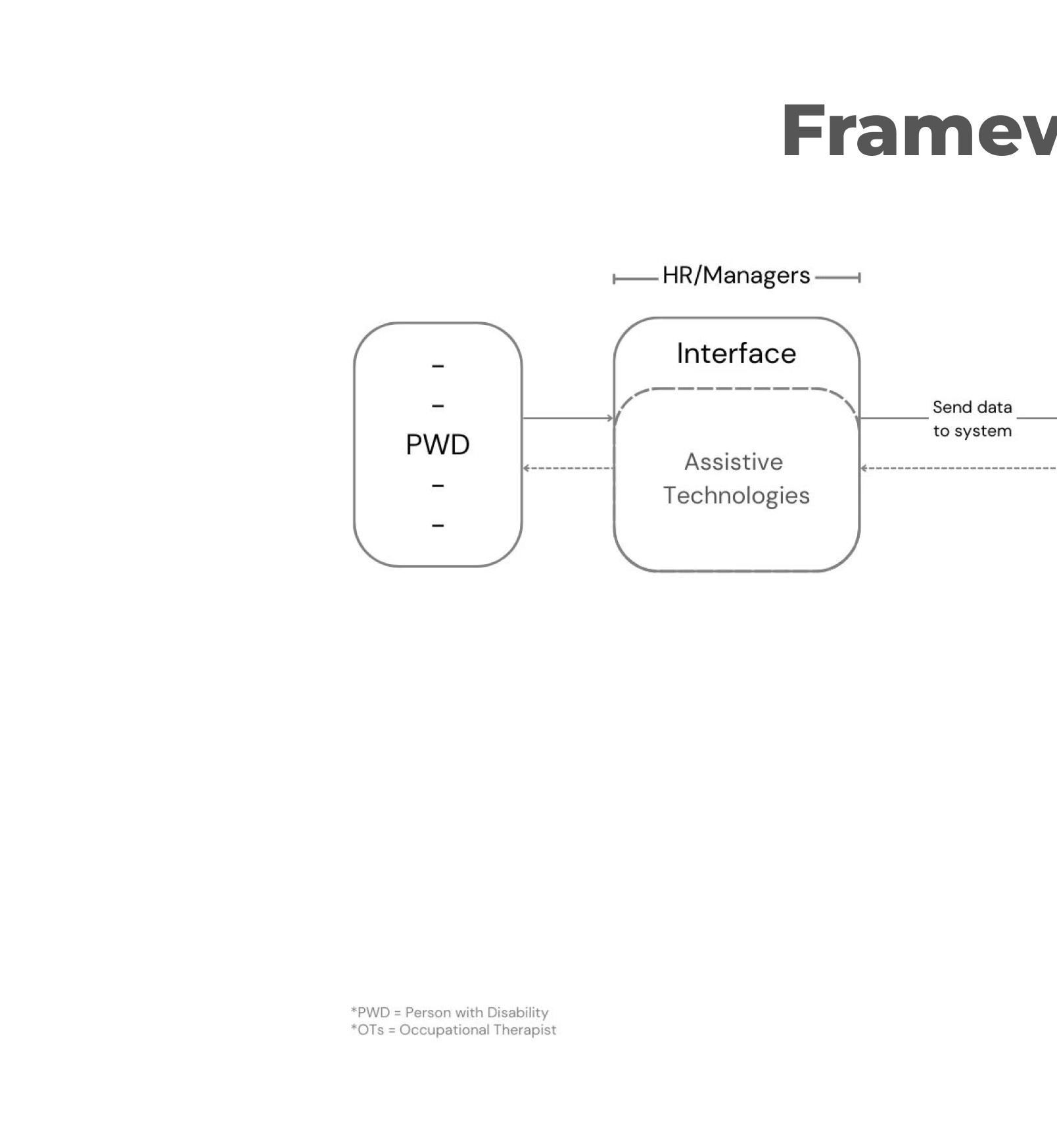
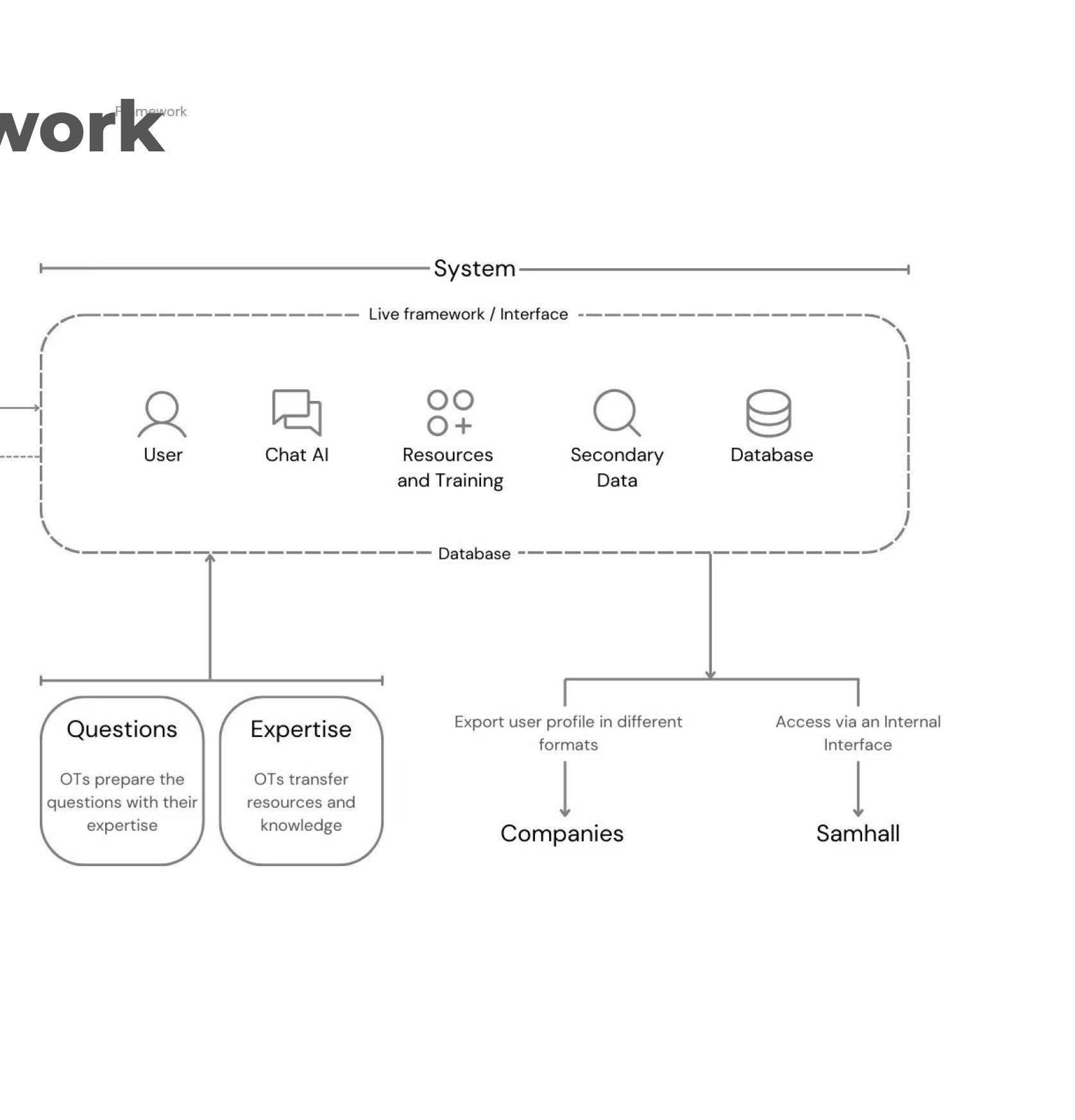
We created a model that would show us the whole picture of how we can create sensible inclusion and induce positive attitude towards employees with disabilities by creating an inclusive onboarding process.

Our onboarding solution involved Occupational therapists, coaches, managers, and also the persons with disabilities at the core. We aimed to create a data repository which is accessible by all the stakeholders at play to be more efficient and to understand their needs and support the employees better. The data would be collected through a questionnaire that will be developed by the occupational therapists.

‍The questionnaire will be presented to the persons with disabilities while onboarding with the help of assistive technologies and managers. Our main focus was to make sure every interaction to be understood by both people and systems. In this way we always tried to revolve around understanding the people better.

Later, this data will be stored in a live repository. An AI Model will be running and clustering the raw data into employee profile that can be accessed through the Samhall’s internal interface. Managers can enter any kind of secondary data during the employees’ time at Samhall, in this way we can understand them and their needs better. An AI Chatbot will be integrated to gather and extract data by the managers.

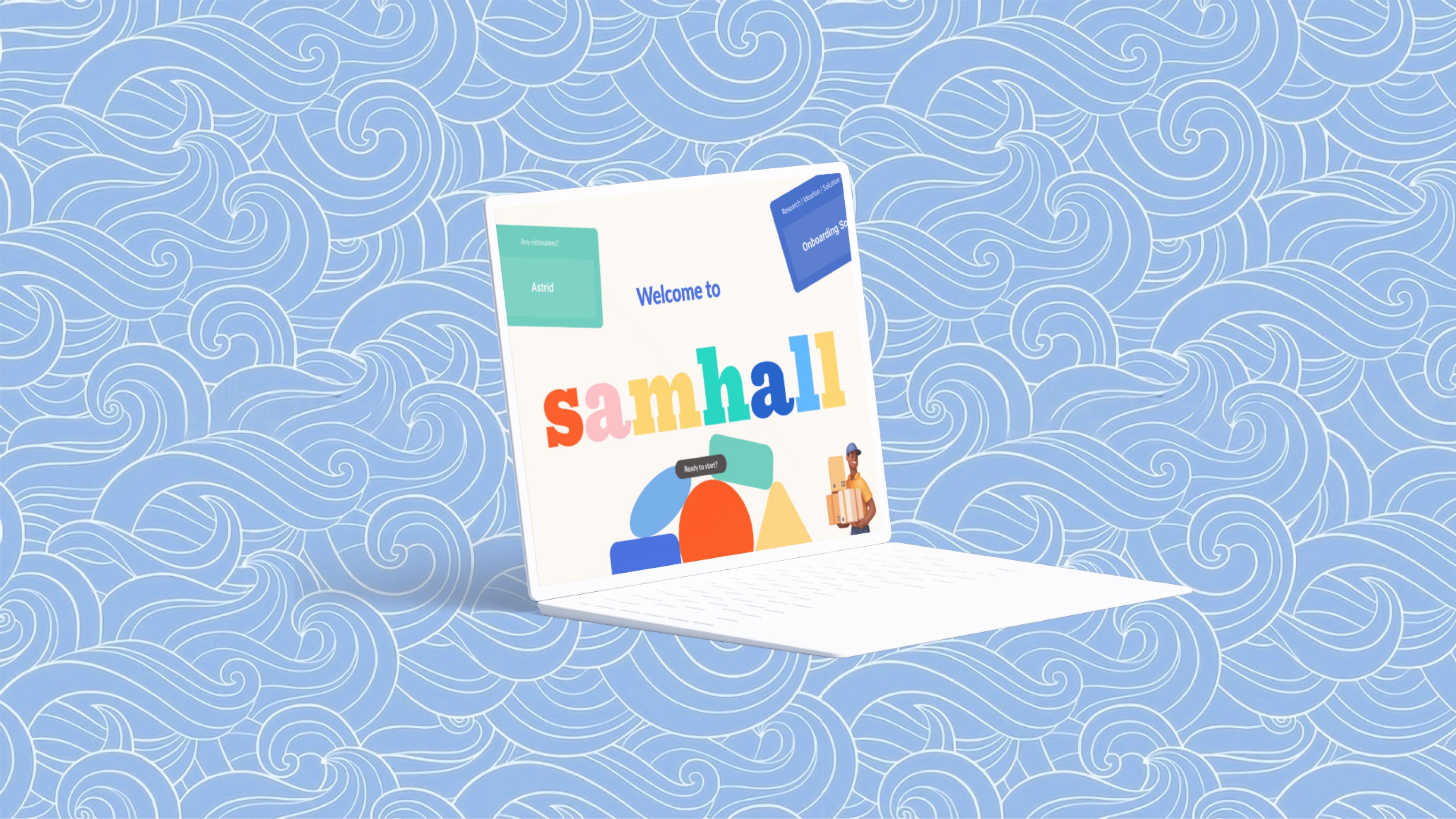
For the onboarding aspect of this project, we decided to concentrate on the interface with the questionnaire integrated with Assistive Technologies
AI Usage

With the rising automations and for scalability our solution incorporated an AI based data repository. AI has no cultural or ethical background. To ensure sustainable growth, AI regulatory awareness and technology monitoring are highly desired. (Khogali & Mekid, 2023) It was very crucial to iterate our solution about the effects of using an AI model for processing sensitive data in an ethical way.

In result, we trained the AI model with a few pre scripts on how it should process, store and behave when a query is entered. We also ensured to keep a backup data and track about the information processed for possible human inspections.

Watch the Demo here

Voice Recognition API

To make the app accessible and interactive, we implemented ‘Web Speech API’ for voice recognition. This allowed users to make selections through spoken commands, enhancing accessibility for individuals who prefer voice input.

It is powered with ‘Whisper’ by OpenAI

AI Chatbot

‘Vectorshift’ AI Agent for data integration between the app, Google Sheets, and chatbot access.

OpenAI LLM for the chatbot.

Testing

We adopted a technique named Cognitive Walkthrough to test the solutions as we had limitations in accessing the real users. A cognitive walkthrough is a task-based usability-inspection method that involves a cross functional team of reviewers walking through each step of a task flow and answering a set of prescribed questions, with the goal of identifying those aspects of the interface that could be challenging to new users. (Flaherty, 2022)

Our proposed solutions required careful attention to privacy, especially when dealing with personal data related to disabilities. Ethical design principles and GDPR compliance standards guided our approach to safeguarding sensitive information. Through our discussions with our client Samhall, we iterated our framework that during the onboarding process, the employee with disability will also get access to their employee profile with all the data stored. This not only provides transparency but also empowers the employee with insights that might be unknown to themselves. In this way we also could ask for further consent if they would like to store or process their data. We also understand that privacy comes a long way and needs to be accessed further.

By testing, we also identified challenges and iterated the use of language to a more inclusive one. We also believe that further testing with focus groups is required to deliver a better version.

AI Usage

With the rising automations and for scalability our solution incorporated an AI based data repository. AI has no cultural or ethical background. To ensure sustainable growth, AI regulatory awareness and technology monitoring are highly desired. (Khogali & Mekid, 2023) It was very crucial to iterate our solution about the effects of using an AI model for processing sensitive data in an ethical way.

In result, we trained the AI model with a few pre scripts on how it should process, store and behave when a query is entered. We also ensured to keep a backup data and track about the information processed for possible human inspections.

Watch the Demo here

Voice Recognition API

To make the app accessible and interactive, we implemented ‘Web Speech API’ for voice recognition. This allowed users to make selections through spoken commands, enhancing accessibility for individuals who prefer voice input.

It is powered with ‘Whisper’ by OpenAI

AI Chatbot

‘Vectorshift’ AI Agent for data integration between the app, Google Sheets, and chatbot access.

OpenAI LLM for the chatbot.

Testing

We adopted a technique named Cognitive Walkthrough to test the solutions as we had limitations in accessing the real users. A cognitive walkthrough is a task-based usability-inspection method that involves a cross functional team of reviewers walking through each step of a task flow and answering a set of prescribed questions, with the goal of identifying those aspects of the interface that could be challenging to new users. (Flaherty, 2022)

Our proposed solutions required careful attention to privacy, especially when dealing with personal data related to disabilities. Ethical design principles and GDPR compliance standards guided our approach to safeguarding sensitive information. Through our discussions with our client Samhall, we iterated our framework that during the onboarding process, the employee with disability will also get access to their employee profile with all the data stored. This not only provides transparency but also empowers the employee with insights that might be unknown to themselves. In this way we also could ask for further consent if they would like to store or process their data. We also understand that privacy comes a long way and needs to be accessed further.

By testing, we also identified challenges and iterated the use of language to a more inclusive one. We also believe that further testing with focus groups is required to deliver a better version.

Other projects

Ajitha Chellam 2025

ajithachellam963@gmail.com

Ajitha Chellam 2025

ajithachellam963@gmail.com

Ajitha Chellam 2025

ajithachellam963@gmail.com

Create a free website with Framer, the website builder loved by startups, designers and agencies.