HCL Tech
Streamlining operations for rural women’s tailoring units
Role
UX/UI Designer
Duration
4 months
Team
CTO, Frontend, Backend, Designers
Outcomes
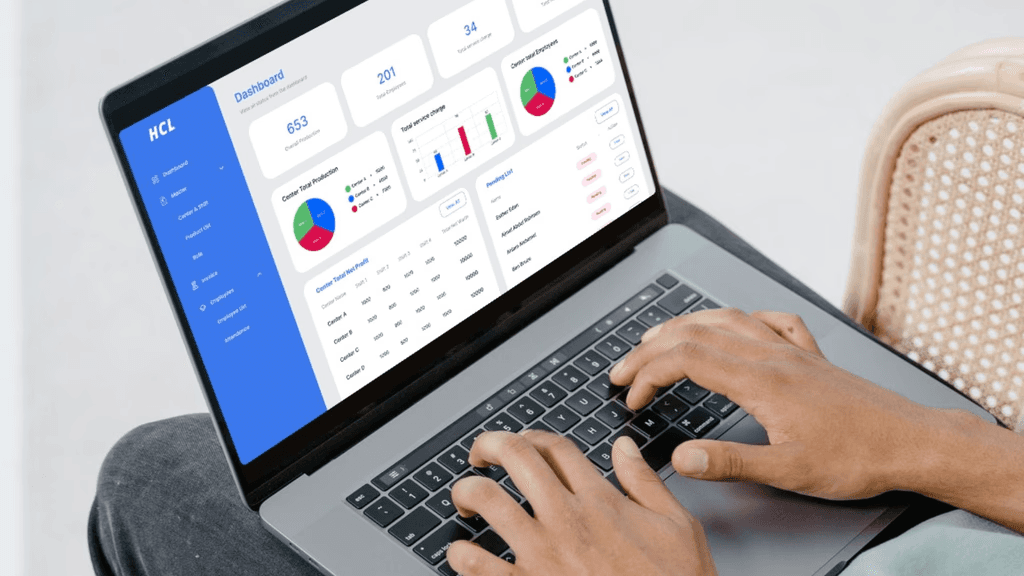
Designed and deployed an intuitive admin web application featuring QR-based attendance, shift management, and inventory tracking. Now used across all HCL Samuday tailoring units in the state.
Context
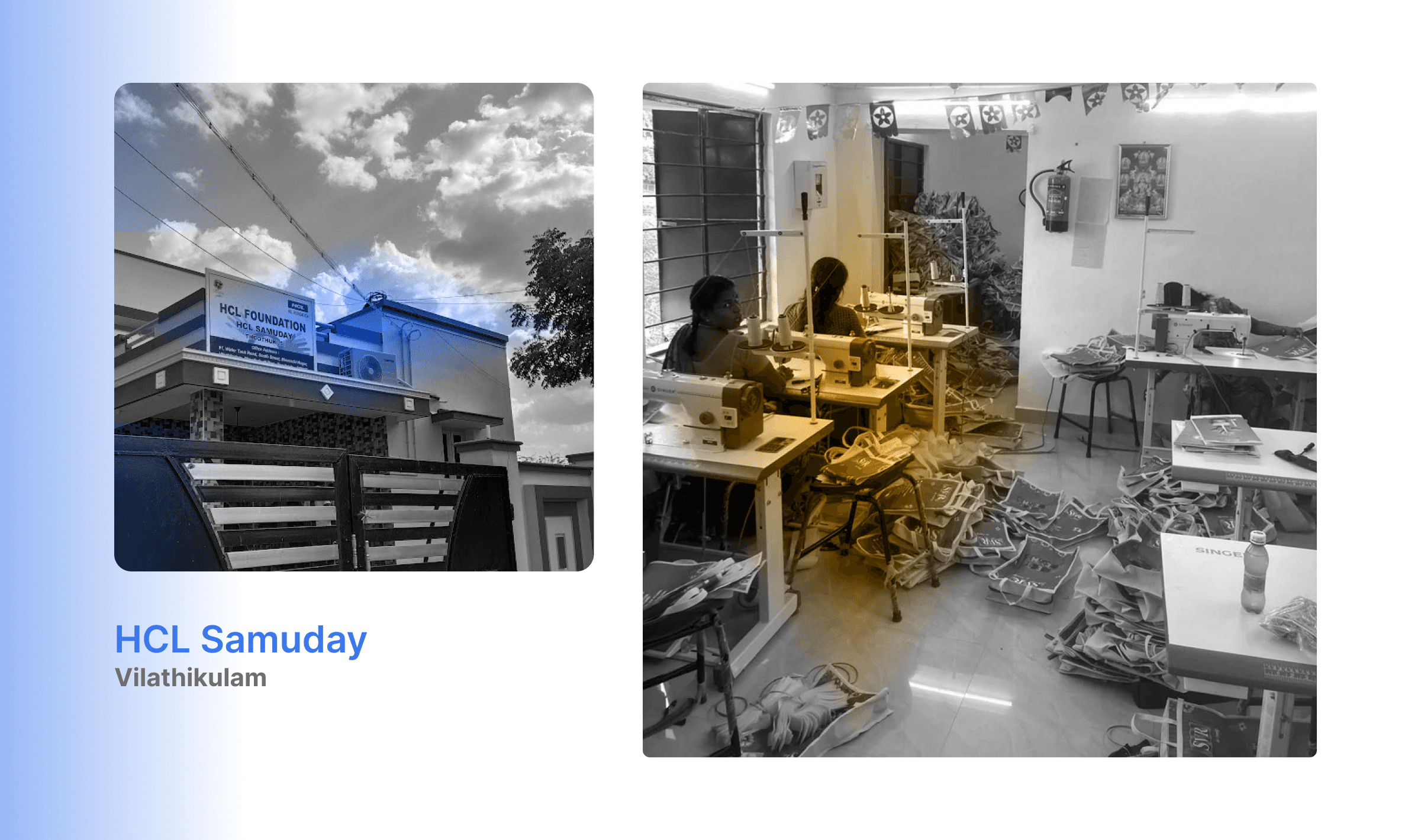
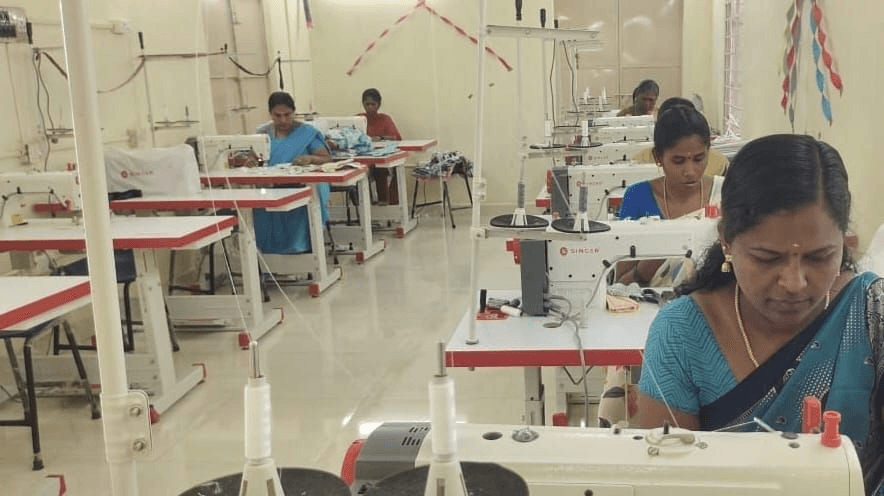
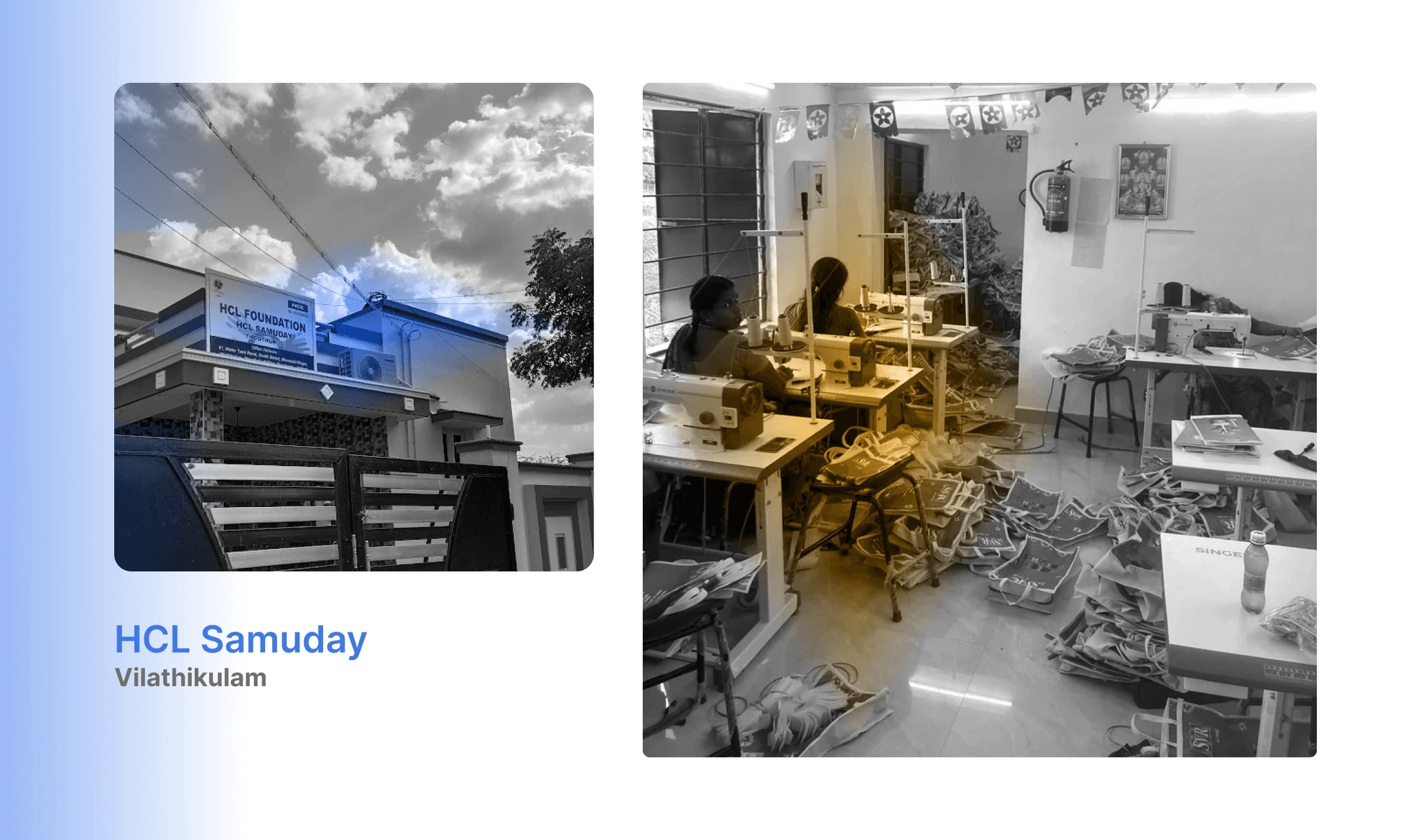
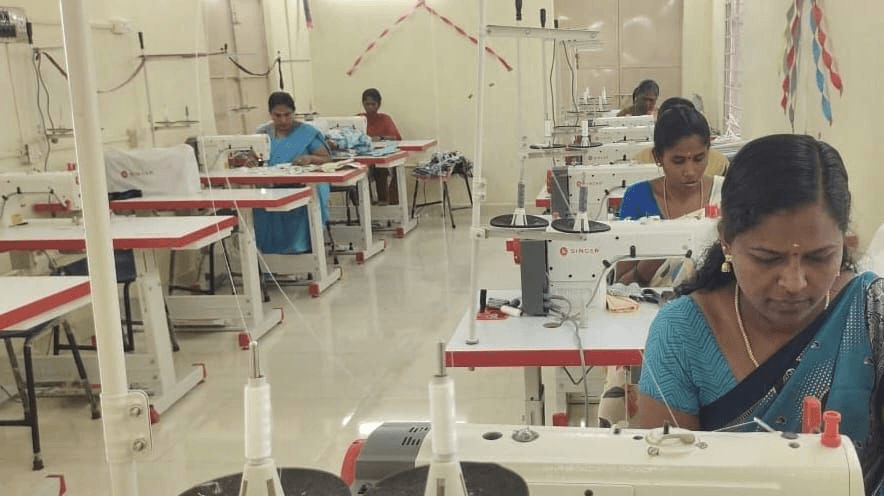
The corporate social responsibility arm of HCLTech in India, HCL Samuday has been launched in Thoothukudi district with an extensive and comprehensive needs identification exercise. HCL Samuday, supports women’s tailoring units in 95 village panchayats across Tamil Nadu. These units needed a single platform to manage employee data, materials, and daily operations in a way that was both easy to use and scalable across multiple sites.
The Problem
HCL Samuday’s tailoring units operated across 95 rural panchayats, but their management relied on manual processes and scattered records. This led to:
Inconsistent attendance tracking
Inefficient shift management
Lack of real-time inventory visibility
Limited data accuracy for reporting
Managers often had low digital literacy, and any tool needed to be easy to use, language-friendly, and scalable to all units.
Research Approach
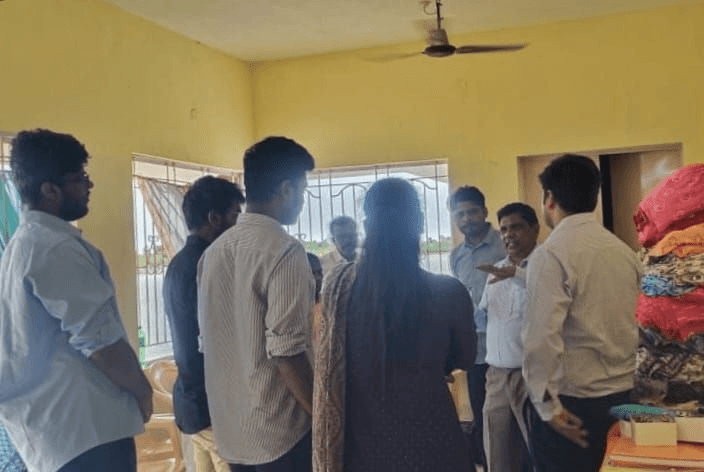
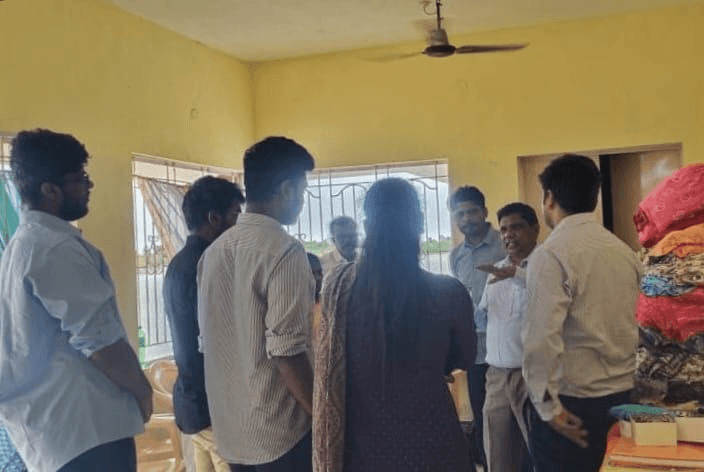
Conducted field visits , in-situ observations and interviews with unit managers and supervisors.
Observed day-to-day workflows, noting where time and effort were being lost.
Collaborated with CSR coordinators to understand compliance and operational requirements.
Key Insights
Paper-based attendance was slow and error-prone.
Tracking fabric and materials across multiple units was a major bottleneck.
Most managers used mobile devices but were unfamiliar with complex apps.
Any solution had to minimize typing and simplify navigation.
Design Approach
We kept the process human-centered and iterative, testing wireframes directly with managers and refining based on feedback. Key choices included:
Task-based navigation to access core actions in two taps or less
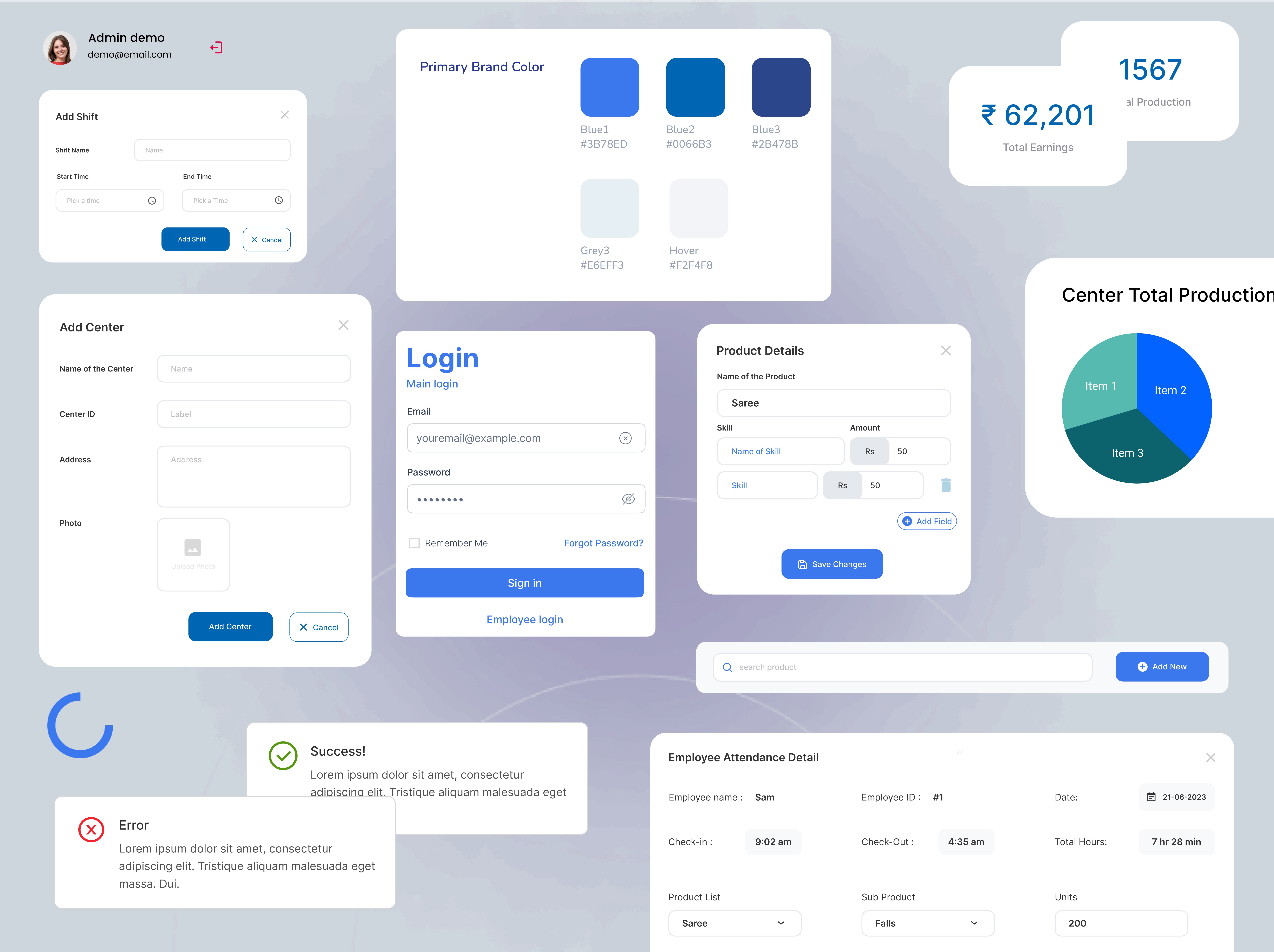
Minimal typing through QR scans, dropdowns, and clear icons
Large touch targets and high-contrast visuals for easy use
The Solution
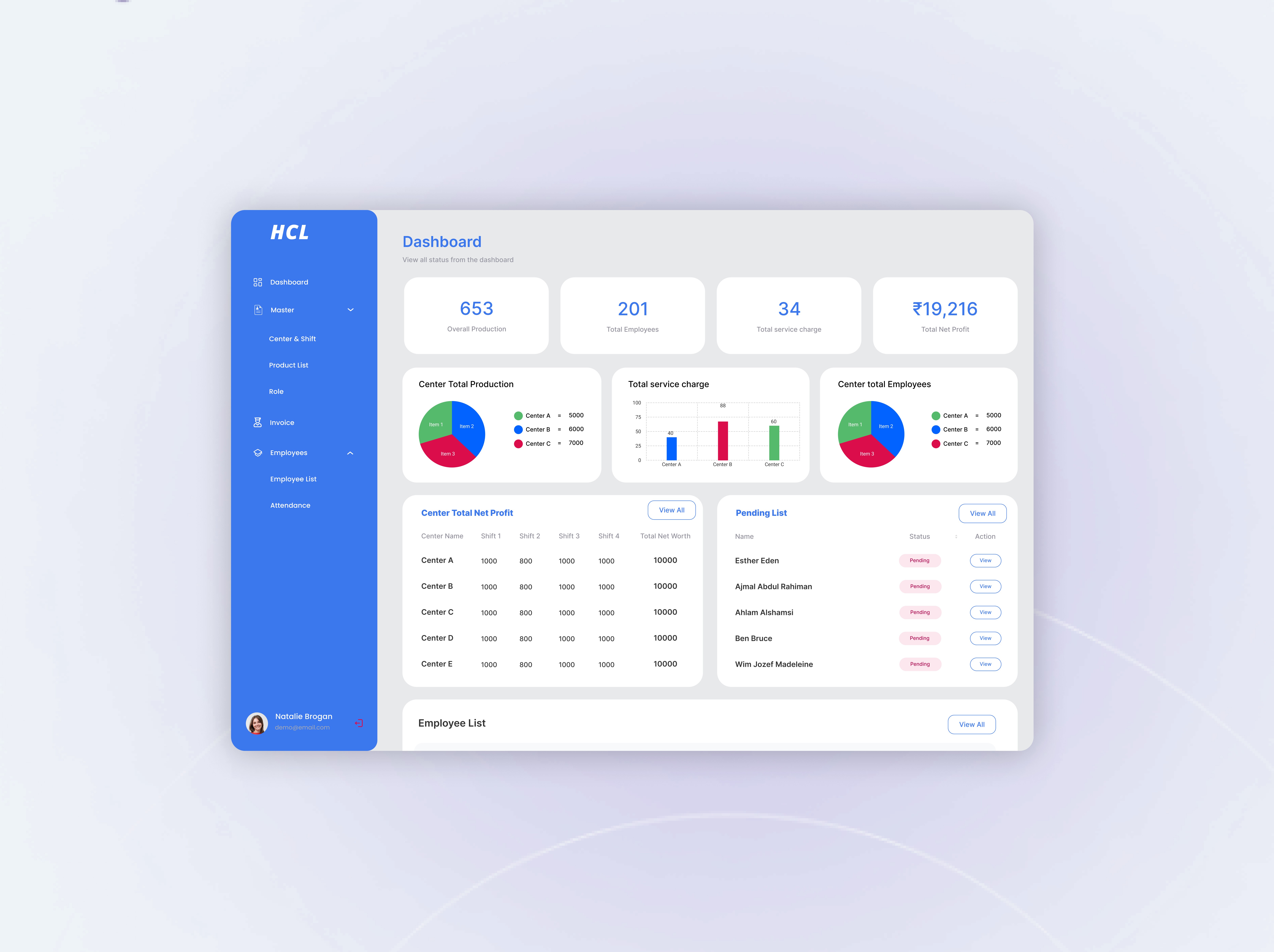
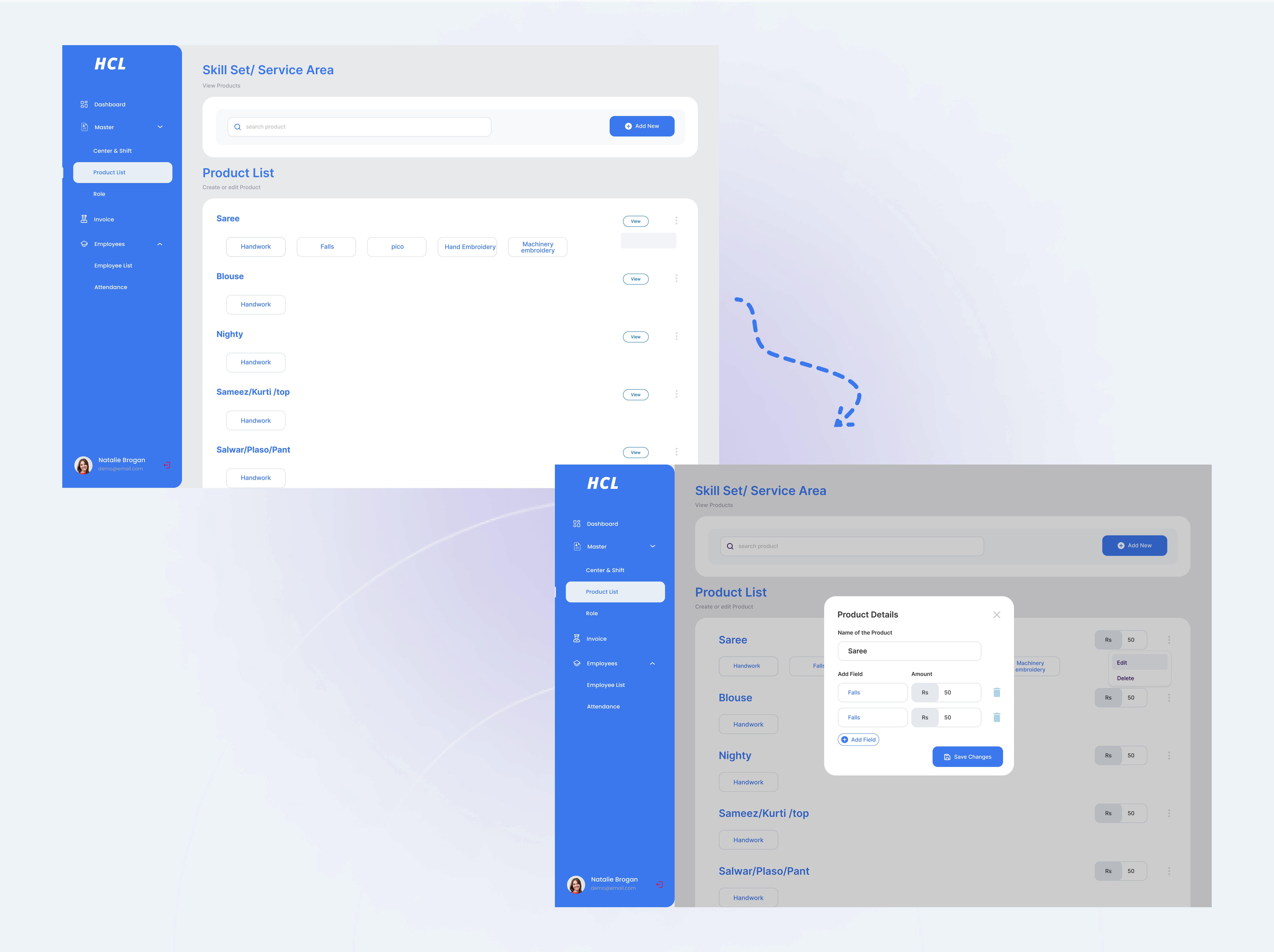
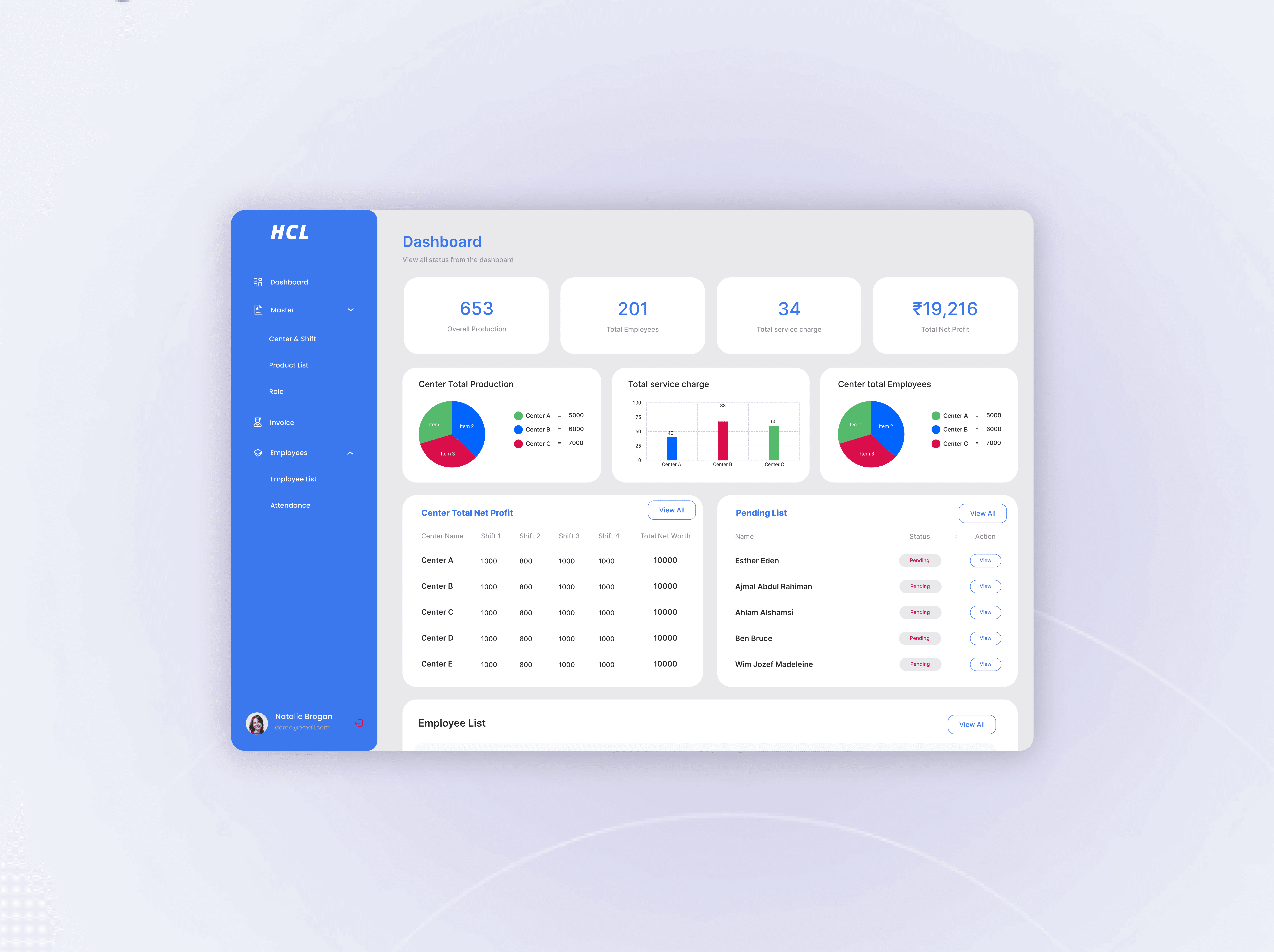
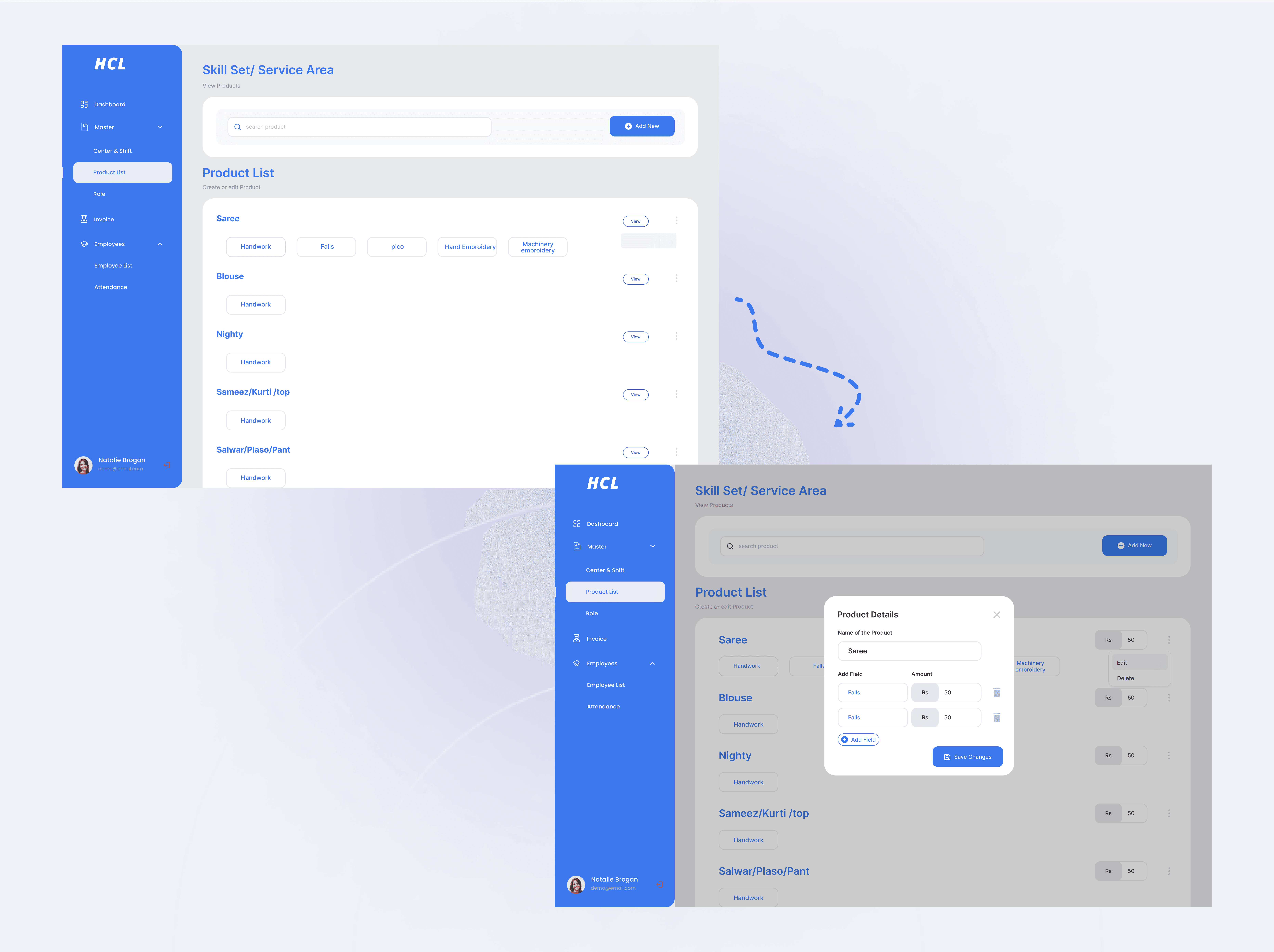
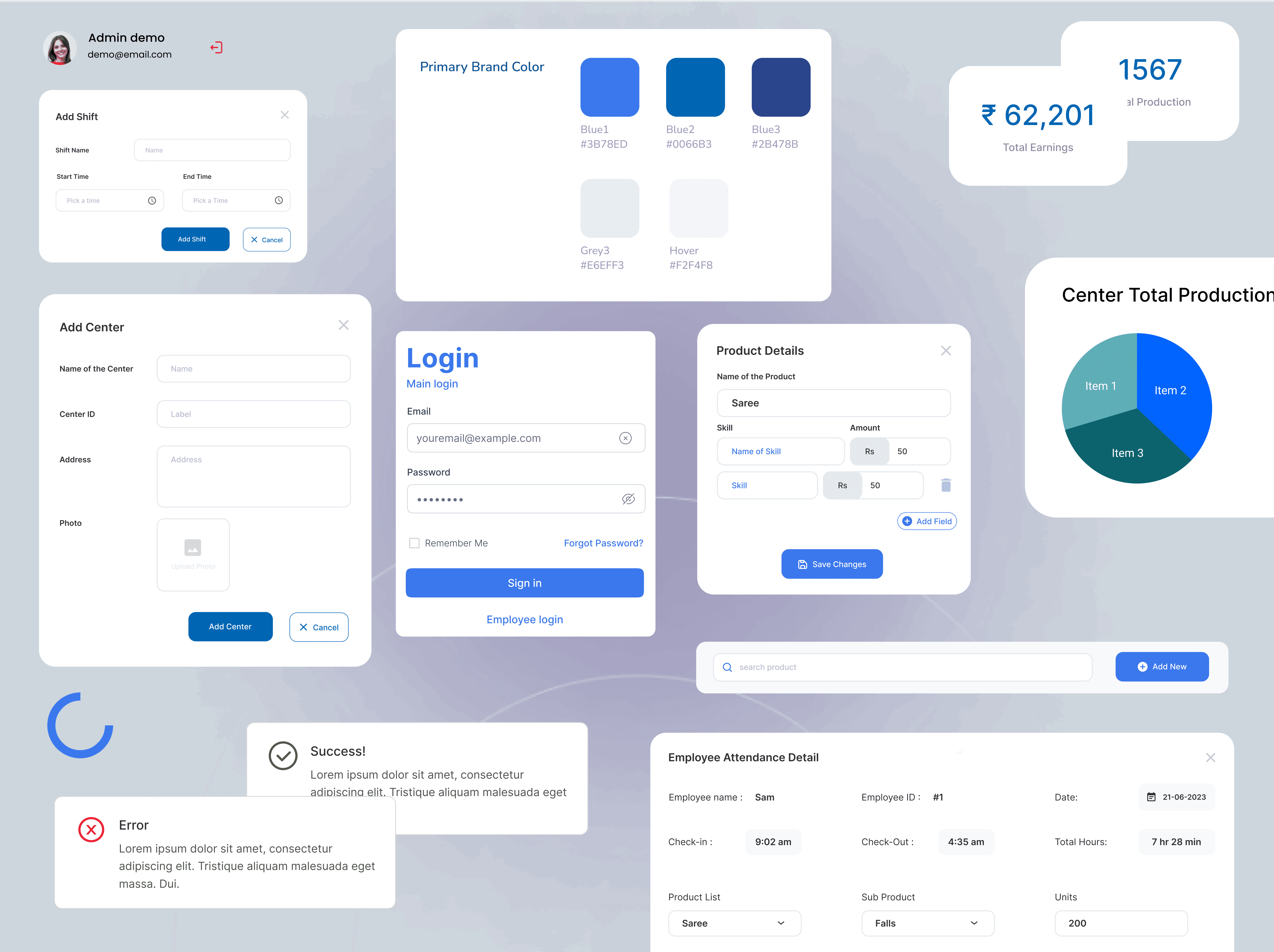
The final web app was built to make daily management simple and consistent across all tailoring units. Managers can log attendance instantly with QR codes, assign shifts, and track material inventory without lengthy forms or complicated navigation.
Core features include:
QR-based attendance scanning for quick, error-free logging
Shift scheduling with a simple calendar view
Real-time inventory tracking across multiple units
High-contrast, icon-led interface for low digital literacy users
The app is now in active use across all HCL Samuday tailoring units in Tamil Nadu, improving operational efficiency and giving CSR managers accurate, centralized data for decision-making.
Impact & Learnings
The app is now actively used across all HCL Samuday tailoring units in Tamil Nadu, improving operational efficiency and enabling accurate, centralized reporting.
Key learnings from this project:
Designing for context first is essential, field visits ensured the solution aligned with real workflows.
Close collaboration with developers simplified complex features for low-tech environments.
Keeping iterations small helped us move quickly without losing sight of user needs.
OTHER PROJECTS
Role
UX/UI Designer
Duration
4 months
Hyper Island Team
CTO, Frontend, Backend, Designers
Context
The corporate social responsibility arm of HCLTech in India, HCL Samuday has been launched in Thoothukudi district with an extensive and comprehensive needs identification exercise. HCL Samuday, supports women’s tailoring units in 95 village panchayats across Tamil Nadu. These units needed a single platform to manage employee data, materials, and daily operations in a way that was both easy to use and scalable across multiple sites.
HCL Tech
Streamlining operations for rural women’s tailoring units
Research Approach
Conducted field visits , in-situ observations and interviews with unit managers and supervisors.
Observed day-to-day workflows, noting where time and effort were being lost.
Collaborated with CSR coordinators to understand compliance and operational requirements.
Key Insights
Paper-based attendance was slow and error-prone.
Tracking fabric and materials across multiple units was a major bottleneck.
Most managers used mobile devices but were unfamiliar with complex apps.
Any solution had to minimize typing and simplify navigation.
The Problem
HCL Samuday’s tailoring units operated across 95 rural panchayats, but their management relied on manual processes and scattered records. This led to:
Inconsistent attendance tracking
Inefficient shift management
Lack of real-time inventory visibility
Limited data accuracy for reporting
Managers often had low digital literacy, and any tool needed to be easy to use, language-friendly, and scalable to all units.
Design Approach
We kept the process human-centered and iterative, testing wireframes directly with managers and refining based on feedback. Key choices included:
Task-based navigation to access core actions in two taps or less
Minimal typing through QR scans, dropdowns, and clear icons
Large touch targets and high-contrast visuals for easy use
The Solution
The final web app was built to make daily management simple and consistent across all tailoring units. Managers can log attendance instantly with QR codes, assign shifts, and track material inventory without lengthy forms or complicated navigation.
Core features include:
QR-based attendance scanning for quick, error-free logging
Shift scheduling with a simple calendar view
Real-time inventory tracking across multiple units
High-contrast, icon-led interface for low digital literacy users
The app is now in active use across all HCL Samuday tailoring units in Tamil Nadu, improving operational efficiency and giving CSR managers accurate, centralized data for decision-making.
The app is now actively used across all HCL Samuday tailoring units in Tamil Nadu, improving operational efficiency and enabling accurate, centralized reporting.
Key learnings from this project:
Designing for context first is essential, field visits ensured the solution aligned with real workflows.
Close collaboration with developers simplified complex features for low-tech environments.
Keeping iterations small helped us move quickly without losing sight of user needs.
Impact & Learnings